
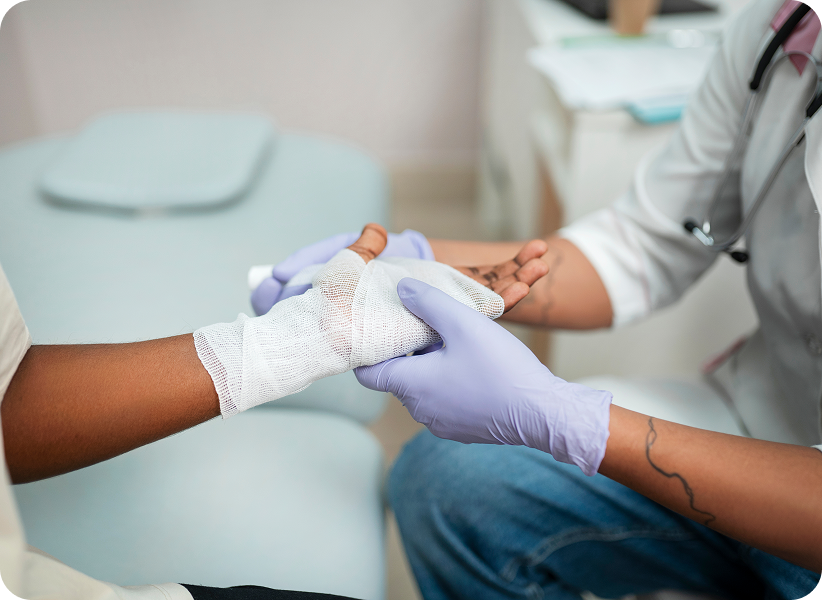
Patient-Friendly Guide: Wound Care Basics
Why This Matters
Taking care of a wound the right way helps prevent infection, speeds healing, and keeps you safe. This guide explains simple steps you can follow at home and when to reach out for help.
✅ Basic Wound Care at Home
- Wash your hands before and after touching your wound.
- Gently clean the wound with mild soap and water or as directed by your provider.
- Use clean dressings to cover the wound and change them regularly.
- Watch for signs of infection (redness, swelling, drainage, odor, fever).
- Eat healthy foods & stay hydrated — good nutrition supports healing.
🚨 When to Seek Medical Help
Call your doctor, nurse, or go to urgent care if you notice:
- Increasing pain, redness, swelling, or warmth around the wound
- Pus, odor, or excessive drainage
- Fever or chills
- Wounds that don’t improve within 1–2 weeks
- Deep wounds, animal/human bites, or injuries with dirt/rust (you may need a tetanus shot)
❌ Common Mistakes to Avoid
- Do not use harsh chemicals (like hydrogen peroxide or alcohol) unless directed by a provider.
- Do not pick at scabs or healing skin.
- Do not reuse old or dirty dressings.
- Do not ignore slow-healing wounds — especially if you have diabetes, poor circulation, or a history of chronic wounds.
🌐 Helpful Websites for Patients
- MedlinePlus – Wound Care
medlineplus.gov/woundcare.html - American Academy of Dermatology – Wound Care Tips
www.aad.org - Wound Healing Society (WHS)
www.woundheal.org - Centers for Disease Control and Prevention (CDC) – Wound & Infection Prevention
www.cdc.gov - WOCN Society – Patient Resources
www.wocn.org/patients