
Wound Care Basics
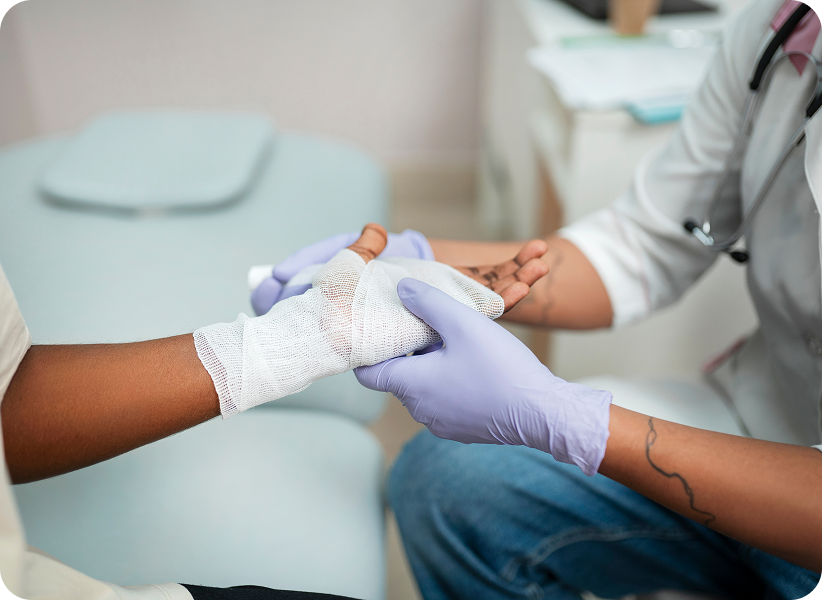
Patient-Friendly Guide: Wound Care Basics
Why This Matters
Taking care of a wound the right way helps prevent infection, speeds healing, and keeps you safe. This guide explains simple steps you can follow at home and when to reach out for help.
Basic Wound Care at Home
- Wash your hands before and after touching your wound.
- Gently clean the wound with mild soap and water or as directed by your provider.
- Use clean dressings to cover the wound and change them regularly.
- Watch for signs of infection (redness, swelling, drainage, odor, fever).
- Eat healthy foods & stay hydrated. Good nutrition supports healing.
When to Seek Medical Help
Call your doctor, nurse, or go to urgent care if you notice:
- Increasing pain, redness, swelling, or warmth around the wound
- Pus, odor, or excessive drainage
- Fever or chills
- Wounds that don’t improve within 1-2 weeks
- Deep wounds, animal/human bites, or injuries with dirt/rust (you may need a tetanus shot)
Common Mistakes to Avoid
- Do not use harsh chemicals (like hydrogen peroxide or alcohol) unless directed by a provider.
- Do not pick at scabs or healing skin.
- Do not reuse old or dirty dressings.
- Do not ignore slow-healing wounds, especially if you have diabetes, poor circulation, or a history of chronic wounds.
Helpful Websites for Patients
- MedlinePlus - Wound Care medlineplus.gov/woundcare.html
- American Academy of Dermatology - Wound Care Tips www.aad.org
- Wound Healing Society (WHS) www.woundheal.org
- Centers for Disease Control and Prevention (CDC) - Wound & Infection Prevention www.cdc.gov
- WOCN Society - Patient Resources www.wocn.org/patients